Compare the best Barbados food tours: walking food tours, cooking classes and island culinary trips. Taste fish cakes, cou-cou and rum punch with a local guide.
Which Food Tour Suits You?
Flying fish and cou-cou, fish cakes pulled hot from the fryer, a shot of rum punch poured without much ceremony at a rum shop counter — Barbados feeds you its history as much as its calories. The island's food culture runs through Bridgetown's lunch counters, Oistins' Friday fish fry, and the kitchens of Speightstown just as much as it runs through any restaurant menu, and a good food tour is the fastest way to understand that. The trouble is that "Barbados food tours" covers a wide range of experiences, from a two-hour street food walk to a full-day private cooking and market trip, and they suit very different travelers.
Picking the right format matters more than picking the right company. A walking tour and a private culinary day might visit some of the same stalls, but one costs a fraction of the other and delivers a completely different pace. Get this choice wrong and you'll either feel rushed through a day you paid a premium for, or stuck in a slow-moving group when what you actually wanted was hands-on cooking instruction.
First-timers and solo travelers
If this is your first trip to Barbados, book a walking food tour in Bridgetown before you do anything else — ideally in your first two or three days. It orients you geographically, introduces you to dishes you'll want to order again later in the trip, and gives you a built-in group if you're traveling alone. Solo travelers in particular benefit from the shared-table moments these tours create; you'll eat alongside four to twelve other people, usually at a mix of stalls and small eateries, and guides tend to keep up a running commentary on Bajan history and food customs. Expect a duration of roughly two to three hours, done on foot, with five to eight tasting stops. It's a low-commitment way to test whether you want to go deeper with a cooking class later in your stay.
Couples, families and foodies
Couples and dedicated foodies get more out of either a cooking class or a private tour, simply because both formats allow for a slower, more personal pace. A cooking class — often held in a home kitchen or small culinary studio — lets you actually make cou-cou and flying fish rather than just taste it, which makes for a better anniversary or honeymoon activity than a group walk. Families with children aged roughly eight and up can usually manage a walking tour's pace, but younger kids often do better with a private tour, where the guide can adjust the route and skip stops that don't interest them. If you're traveling with a food-obsessed partner or friend and want market visits, rum tastings and a cooking demonstration all in one day, a full island culinary tour is worth the extra cost — just confirm upfront how much walking versus seated time is involved.
Barbados Food Tour Types Compared
Four broad categories cover almost everything marketed as a Bajan food tour: walking/street food tours, cooking classes, private food tours, and full island culinary trips that combine several elements into one day. None of these is objectively "best" — they trade off cost, control and depth differently, and the right pick depends on how you like to travel.
A walking tour is the cheapest and most social way to sample Bajan food, while private and cooking-class formats trade cost for control and depth.
Barbados food tour types compared: format, pace and who they suit
| Tour Type | Typical Duration | Group Size | Best For | Pace |
|---|---|---|---|---|
| Walking/street food tour | 2–3 hours | Small group (6–15) | First-timers, solo travelers, budget-conscious couples | Brisk, fixed route |
| Cooking class | 3–4 hours | Small group (4–10) | Couples, foodies, hands-on learners | Moderate, instructional |
| Private food tour | Half day to full day | 1–6 (your party) | Families, dietary restrictions, special occasions | Flexible, set by you |
| Island culinary tour | Full day | Small group or private | Travelers wanting one thorough outing | Varied, multi-stop |
Durations and group sizes are typical ranges; confirm specifics with the operator before booking.
Walking food tours and street food
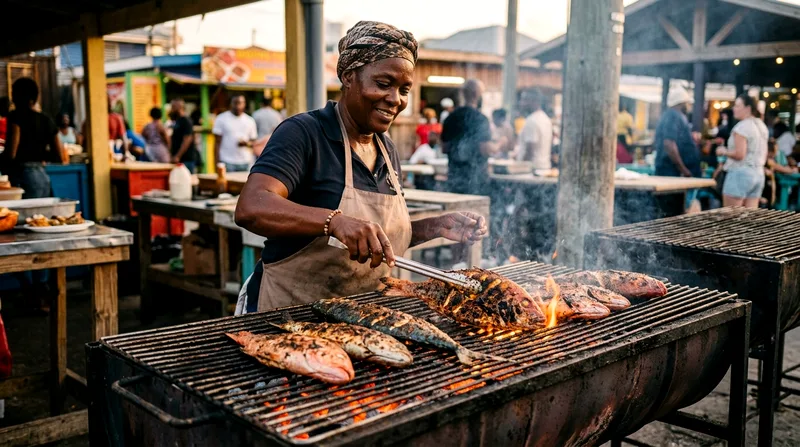
Walking tours are the backbone of Barbados's food tourism, and operators such as Lickrish Food Tours and Lick De Bowl Food Tours have built reputations around exactly this format — small groups moving on foot through Bridgetown's streets and market stalls, stopping for fish cakes, macaroni pie, black pudding and other street staples. These run two to three hours, cover roughly one to two miles of walking, and typically include six or more tastings plus a drink or two. They suit first-timers, solo travelers and budget-conscious couples well. The downside: fixed departure times, a set route, and a pace dictated by the group — if you have severe dietary restrictions or want to linger at one stall, a group walk won't easily accommodate that. Some operators also run themed variations focused on rum shops or on Oistins' fish fry scene, which is worth asking about if seafood is your main interest.
Cooking classes and private culinary tours
Cooking classes shift the experience from tasting to doing. Most run three to four hours, include a market or ingredient briefing, hands-on preparation of two or three dishes — cou-cou and flying fish is the classic combination — and a sit-down meal of what you've made. Group sizes tend to be smaller than walking tours, often four to ten people, which makes them a reasonable middle ground for couples who want some instruction without paying for a fully private booking.
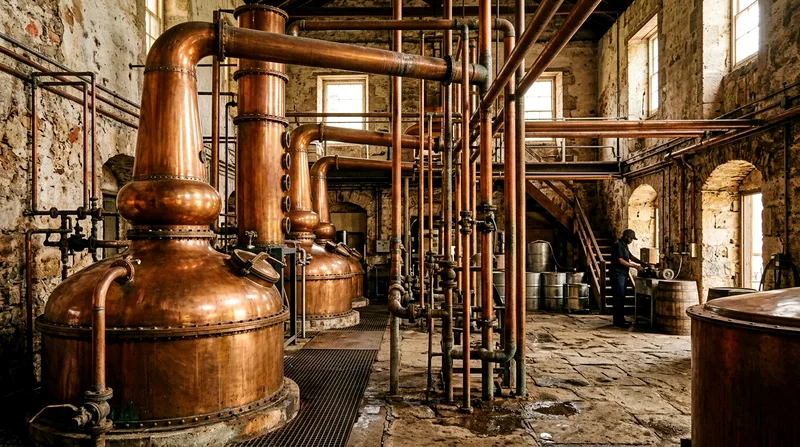
Private food tours and full island culinary tours sit at the top of the price range because you're paying for exclusivity and flexibility, not necessarily more food. A private tour can be built around your schedule, dietary needs and interests — more rum shops, less dessert, whatever you want — and typically runs a half day to a full day. Island culinary tours go further, often combining a Bridgetown food walk with a visit to a rum distillery, a stop in Speightstown, and sometimes a cooking demonstration, making for a longer, more expensive day that suits travelers who want one thorough food-and-culture outing rather than several smaller bookings.
Bajan Dishes You Will Taste
Whatever format you choose, certain dishes show up on nearly every itinerary, because they're what Bajans actually eat, not what's been invented for tourists. Expect fried plantain, macaroni pie (a baked, cheese-heavy relative of mac and cheese that Bajans treat as a side dish, not a joke), pudding and souse on weekends, and golden apple or tamarind balls as a sweet finish. The quality of a tour often comes down to whether it takes you to places locals actually queue at — Oistins on a Friday night, for instance — rather than a sanitized stop built solely for visitors.
Fish cakes, cou-cou and flying fish
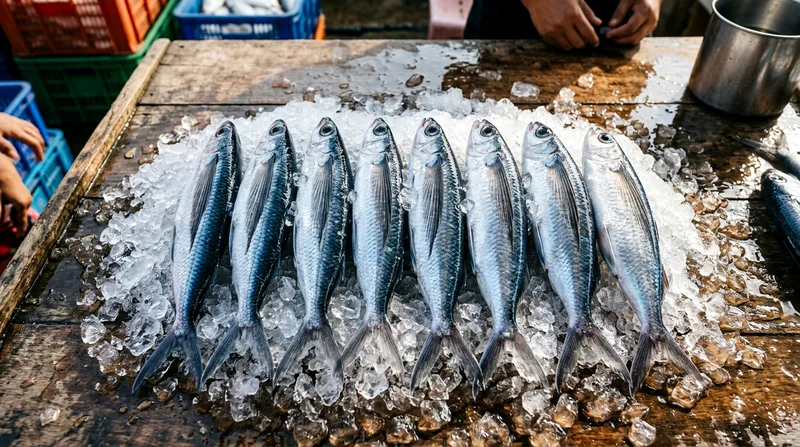
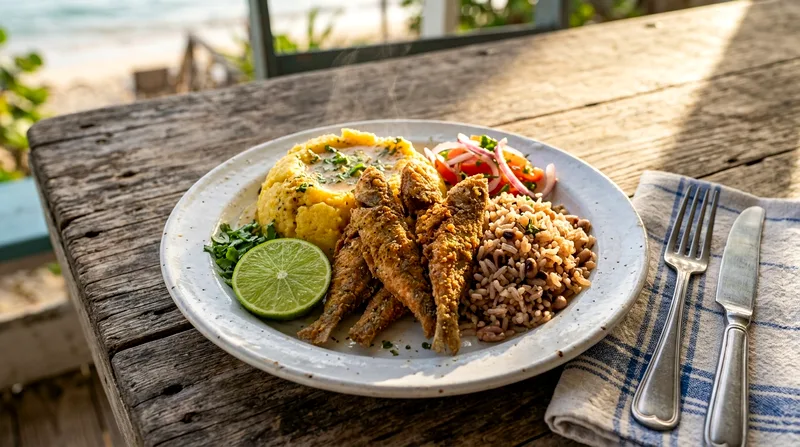
Fish cakes — salted cod mixed with herbs and fried into small, crisp balls — are Barbados's unofficial national snack, sold from roadside stands for a dollar or two and eaten standing up. Cou-cou, a cornmeal and okra dish, paired with steamed flying fish in a light gravy, is the island's national dish and the centerpiece of most cooking classes. Flying fish itself is increasingly imported from Guyana or Suriname because Bajan stocks have thinned, a detail worth asking your guide about if you care where your food actually comes from — a good guide will tell you honestly rather than gloss over it.
Rum punch and local drinks
Barbados claims to be the birthplace of rum, and most tours build in at least one stop at a rum shop — a small, often family-run bar that's as much a community hub as a drinking spot. Rum punch here follows the old formula ("one of sour, two of sweet, three of strong, four of weak") rather than the sugary tourist version served at resort bars, and it's worth comparing the two so you understand the difference. Falernum, a local spiced syrup, and mauby, a bitter bark-based soft drink, round out the non-cocktail options and show up on most tastings menus.
What to Look for When Booking
Not every "Barbados food tour" listing delivers the same experience, and the difference often isn't obvious from a one-paragraph description. Read past the headline photo and check what's actually included before paying.
Inclusions, group size and dietary needs
Confirm whether drinks, gratuities and transport between stops are included, since some listings price the tastings only and add extras later. Group size matters more than people expect — a tour capped at eight to ten people lets a guide actually answer questions and manage pacing, while anything over fifteen starts to feel like a shuffling queue rather than a tour. If you have a shellfish allergy, are vegetarian, or keep kosher or halal, email the operator directly before booking rather than relying on a generic "dietary needs accommodated" line; Bajan cuisine leans heavily on pork, saltfish and shellfish, and not every stop has a workable substitute on short notice.
Cancellation policy and accessibility
Check the cancellation window before you pay — many operators listed on Viator allow free cancellation up to 24 hours ahead, which matters on an island where sudden rain showers or ship-schedule changes (if you're arriving by cruise) can derail a morning booking. Accessibility is worth asking about directly: Bridgetown's pavements are uneven in places, Oistins' market area involves some standing and jostling, and few walking tours offer seating breaks beyond the tasting stops themselves. If you use a wheelchair or have limited mobility, a private tour with a vehicle between stops will serve you far better than a standard walking format.
When to Book Your Food Tour
Food tours in Barbados run year-round, but when you book — and when you travel — affects both availability and the experience itself. Check TripAdvisor and Viator listings for recent reviews before committing; look specifically for comments on guide knowledge and pacing, not just "great food," since that tells you more about whether the tour matches your expectations.
Peak season versus quieter months
December through April is Barbados's peak tourist season, driven by travelers escaping colder climates in the UK and North America, and food tours during these months fill up faster — booking two to three weeks ahead is sensible, especially for small-group or private options. The quieter months, roughly June through November, coincide with the Atlantic hurricane season, but also mean more flexible scheduling, sometimes lower prices, and less crowded market stops in Bridgetown and Speightstown. If your trip falls in this window, you'll likely get a more relaxed, personal experience with your guide, though you should keep an eye on the forecast and book tours with a flexible cancellation policy just in case.
Frequently asked questions
What traditional dishes are included in Bajan food tours?
Most tours include fish cakes, cou-cou and flying fish, macaroni pie, plantain, and a rum tasting. Weekend tours sometimes add pudding and souse, a pickled pork and sweet potato dish traditionally eaten on Saturdays. Ask your guide in advance if you want to confirm specific dishes, since menus shift with what's fresh at the market that day.
How long do Barbados food tours last?
Walking food tours typically run two to three hours. Cooking classes run three to four hours including the meal. Private and island culinary tours can run a half day to a full day, depending on how many stops and activities are combined into the itinerary.
Are there private food tour options available?
Yes. Several operators offer private Barbados food tours alongside their standard group departures, letting you set the pace, adjust the route, and accommodate dietary restrictions more easily. Expect to pay more per person than a group walking tour, since you're covering the guide's time exclusively.
What is included in a walking food tour?
Typically a guide, five to eight tastings at street stalls or small eateries, at least one drink (often rum punch or a local soft drink like mauby), and running commentary on Bajan history and food culture. Gratuities and extra drinks are sometimes separate — check the listing before booking.
Can food tours cater to vegetarian or allergy needs?
Some can, but Bajan cuisine relies heavily on saltfish, shellfish and pork, so options are more limited than in cities with broader vegetarian infrastructure. Contact the operator directly before booking to confirm they can substitute dishes, rather than assuming a general "accommodates most diets" claim will cover your specific restriction.