Plan a Barbados yacht rental with confidence: compare crewed yachts, catamarans and powerboats, half vs full day, inclusions, deposits and questions to ask.
What a Barbados Yacht Rental Is
A Barbados yacht rental covers anything from a two-hour sunset sail out of Carlisle Bay to a full-day private charter running north from Bridgetown Port past Holetown and up toward Port St. Charles. Most visitors aren't renting a bareboat — they're booking a crewed experience where a captain and at least one deckhand handle navigation, anchoring, snorkel stops and food service. That distinction matters more in Barbados than in some charter destinations, because the west coast has calm, lee-side water that's forgiving for beginners, but the Atlantic side and the open channels can turn choppy fast if conditions shift.
The west coast — roughly from Bridgetown up to Speightstown — is where almost all leisure charters operate, because it's sheltered from prevailing trade winds and has reliable visibility for snorkeling. You won't find charter boats running day trips on the rougher east coast; that side is for surfers and photographers, not swimmers.
Pricing and format vary by boat size, trip length, and what's included, which the next sections break down. But the headline difference you'll decide first is crewed versus self-drive, and half-day versus full-day.
Crewed charters vs self-drive boat hire
Crewed charters dominate the Barbados market, and for good reason — local captains know where the turtles feed, where the reef shelves drop off, and how to read squalls rolling in from the Atlantic side before they hit the coast. You're paying for that knowledge as much as the boat itself. Self-drive rentals do exist, mostly smaller powerboats and day skiffs out of marinas near Bridgetown, but they typically require a boating license or proof of experience, and insurance terms are stricter. If you've never skippered in unfamiliar water, I wouldn't recommend self-drive here — the coral reefs close to shore are easy to damage, and local mooring etiquette isn't always obvious to visitors. A crewed half-day catamaran charter solves that problem entirely and usually costs less per person than renting a comparable self-drive boat plus fuel.
Half-day vs full-day rental formats
Half-day charters typically run three to four hours and focus on one or two anchor points — a snorkel stop near a wreck or reef, maybe a turtle encounter, then back to port. Full-day charters generally stretch five to seven hours, covering more coastline, often including a lunch stop in a quiet bay and sometimes a stop in Holetown for those who want a short walk ashore. Sunset cruises are their own shorter category, usually two to three hours timed to finish as the light drops — popular for anniversaries and honeymoons, less practical if you're traveling with young kids who'll be ready for dinner by 6pm. If your main goal is the turtle swim and a couple of hours in the water, a half-day is plenty; don't pay full-day rates just to sit on a longer cruise with nothing new to see.
What's Included and What Costs Extra
Inclusions vary enough between operators that you genuinely need to ask before booking rather than assume. This is the single biggest source of disappointment with yacht charters anywhere in the Caribbean, Barbados included — not the boat quality, but mismatched expectations about what's covered.
Typical inclusions: crew, snorkel gear, drinks and food
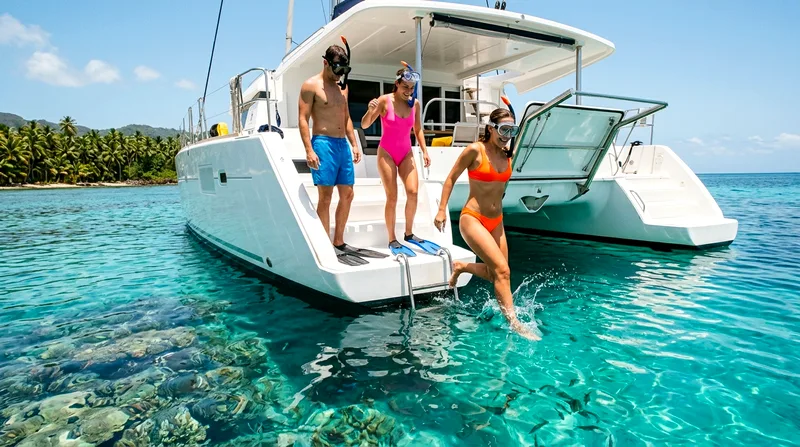
Most crewed charters in Barbados include the captain and crew, snorkel masks and fins, basic soft drinks, rum punch or local beer, and some form of food — anything from a simple sandwich platter on a half-day trip to a full barbecue lunch with grilled fish or chicken on a full-day charter. Freshwater rinse showers onboard are standard on larger catamarans, less common on smaller powerboats. Some operators throw in paddleboards or a floating trampoline for a shared or larger-capacity boat; ask specifically if that matters to your group, since it's not universal. If you have dietary restrictions, flag them when booking — kitchens on a 40-foot boat are small, and last-minute substitutions aren't always possible.
Fuel, taxes, gratuities and other add-ons
For a private full-boat charter, fuel is usually built into the quoted price, but confirm it — longer full-day trips covering more distance sometimes pass through a fuel surcharge, particularly if prices spike. Government taxes (VAT) and a service charge are often added separately at checkout rather than baked into the headline figure, so the number you see advertised isn't always the number you pay. Gratuity for the crew is customary and generally not included — budgeting roughly 10-15% of the charter cost for the crew is standard practice, similar to tipping norms on charters in St. Lucia or Antigua. Extras like a professional photographer, extra snorkel equipment for large groups, or a birthday cake setup usually cost more and need advance notice. Alcohol beyond the house rum punch and beer — premium spirits or wine, for instance — is sometimes a bring-your-own arrangement, so ask directly.
Yacht, Catamaran and Powerboat Options Compared
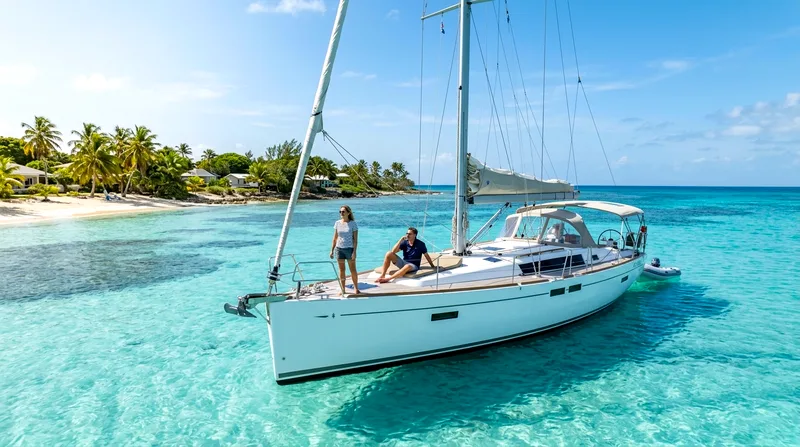
Boat type changes the whole feel of the day more than most first-time charterers expect. A sailing catamaran moves slower and leans less than a monohull, which makes it the most comfortable option for families with children, older guests, or anyone nervous about motion. A motor yacht gets you to distant snorkel spots faster and tends to feel more "luxury yacht Barbados day" in presentation — leather seating, higher-end sound systems, more polished service — but it burns more fuel, which shows up in the price. A powerboat is the budget and speed option: smaller groups, shorter trips, less shade, less onboard comfort, but noticeably cheaper per hour.
A sailing catamaran is the most comfortable all-round choice for families and groups, while powerboats suit short, budget-focused outings for two to six people.
Barbados yacht rental options compared by boat type, group size and typical duration
| Boat Type | Typical Group Size | Typical Duration | Best For | Comfort Level |
|---|---|---|---|---|
| Sailing catamaran | 6-12 guests | Half-day or full-day | Families, snorkeling, turtle swims | High, stable, shaded |
| Motor yacht | 4-10 guests | Half-day, full-day, sunset | Celebrations, faster coverage | High, polished finish |
| Powerboat | 2-6 guests | 2-4 hours | Budget trips, small groups | Moderate, less shade |
| Shared/semi-private cruise | Per-seat booking | 2-3 hours | Solo travelers, couples | Moderate, shared space |
Capacities and durations vary by operator and vessel; confirm exact limits and licensing before booking.
Sailing catamaran vs motor yacht vs powerboat
If snorkeling with turtles near Carlisle Bay or the wrecks off the west coast is your priority, a catamaran is the sensible default — stable deck space, usually a trampoline net at the bow, and enough shade for a full day in the sun. Motor yachts suit groups wanting a faster pace, more distance covered, or a genuinely upscale feel for a special occasion; expect a higher per-hour rate than a comparable catamaran. Powerboats work well for small groups of two to six who want a short, active, low-cost outing — think two hours of cruising and swimming rather than a leisurely lunch cruise. None of these is objectively "better"; it's a trade-off between comfort, speed, and budget, and the wrong choice for your group type is the main regret I'd flag — families often overpay for motor yacht speed they don't need, while couples celebrating an anniversary sometimes undersell the day on a bare-bones powerboat.
Group size and per-person cost logic
Private charters are priced per boat, not per person, which changes the math completely depending on group size. A private catamaran that comfortably holds ten to twelve guests costs roughly the same whether four people book it or twelve — so a group of two or three couples splitting one boat often pays less per person than booking individual seats on a shared snorkel cruise. Solo travelers and couples without a group to fill a boat should look at shared or semi-private trips, common through operators based around Bridgetown Port and the Barbados Yacht Club, where you pay per seat rather than chartering the whole vessel. Always ask the maximum capacity versus the comfortable capacity — a boat licensed for twenty passengers is a very different experience at full capacity than at half.
How to Book a Yacht Charter
Book through licensed operators rather than informal arrangements offered dockside — Barbados Port Inc and the Barbados Tourism Marketing Inc maintain standards for commercial vessels, and a licensed operator carries the insurance and safety certification that an unlicensed one-off arrangement won't. Start by checking reviews on TripAdvisor for consistency over time rather than a single glowing review, and cross-reference the operator's base — Bridgetown Port, Port St. Charles, and the marina near the Barbados Yacht Club are the main departure points for west coast charters. Request a written quote itemizing duration, inclusions, maximum guests, and cancellation terms before you pay anything.
Deposits, cancellation and weather policies
Most Barbados charter operators ask for a deposit of 25-50% to confirm a booking, with the balance due before departure or on the day. Cancellation windows vary — some operators offer a full refund up to 48 or 72 hours out, others less — so get this in writing, not just verbally confirmed. Weather policy matters more here than travelers expect: Barbados sits in the hurricane belt and the wet season (roughly June through November) brings squalls that can cancel a trip with little notice. A reputable operator will reschedule or refund for safety-related cancellations rather than forcing you out in rough seas; be wary of any operator vague about this when you ask directly.
Questions to ask before paying
Before handing over a deposit, ask: Is the captain licensed and is the vessel commercially registered with Barbados Port Inc? What exactly is included — food, drinks, snorkel gear, gratuity? What's the maximum passenger count versus how many will actually be aboard your day? What's the refund policy for weather cancellations versus personal cancellations? Is life jacket and safety equipment provided for children specifically, not just adult sizes? Getting clear answers in writing — even a simple email confirmation — protects you far more than a verbal assurance at the dock.
Is a Yacht Rental Worth It?
A private Barbados yacht charter is worth the cost for the right group, but it's genuinely not for everyone, and I'd rather say that plainly than oversell it. Compared to island-hopping options like a St. Lucia catamaran day or an Antigua sailing charter, Barbados's west coast is calmer and more beginner-friendly, which is a real advantage if your group includes nervous swimmers or older travelers. It's less dramatic scenically than the Pitons backdrop you get sailing off St. Lucia, so set expectations accordingly — you're buying calm water and turtle encounters here, not towering volcanic peaks.
Couples, families and celebration groups
Couples celebrating anniversaries or honeymoons get strong value from a half-day or sunset charter — the cost per person drops significantly if even four people split one boat, and most operators will set up a small celebration touch like decorations or a cake with advance notice. Families with children aged roughly six and up do well on a stable catamaran with a full-day format that includes a lunch stop, giving kids a break from the water without rushing the day. Large celebration groups — birthdays, bachelor or bachelorette parties — should book a boat with clearly stated maximum capacity and ask directly about noise or alcohol policies, since some operators limit amplified music near residential coastline stretches like Holetown.
Budget travelers and shared-cruise alternatives
If a private charter is out of budget, shared snorkel cruises and semi-private sailing trips cover much of the same ground — turtle swims, reef stops, rum punch — at a per-seat price rather than a whole-boat rate. This suits solo travelers and couples without a group to split costs with. The trade-off is less flexibility: a shared cruise runs a fixed route and schedule, with no detours for your preferences. Compared to Aruba or the Bahamas, where large catamaran party cruises are common and loud, Barbados shared trips tend to run smaller and calmer, which suits travelers who want the turtle encounter without the nightclub atmosphere.
Frequently asked questions
What types of yachts can you charter in Barbados?
You can charter sailing catamarans, motor yachts and smaller powerboats, almost all crewed rather than self-drive. Catamarans are the most common choice for snorkeling and family trips because of their stability; motor yachts suit faster, more upscale outings; powerboats suit short, budget-conscious trips for small groups.
What is included in a crewed yacht charter in Barbados?
Typically the captain and crew, snorkel gear, soft drinks, rum punch or beer, and some food ranging from sandwiches to a full barbecue lunch on full-day trips. Extras like premium alcohol, photography or paddleboards often cost more — confirm specifics with the operator before booking.
Can I book a half-day or full-day yacht rental?
Yes, both formats are widely available. Half-day charters run roughly three to four hours and suit a single snorkel stop or turtle swim; full-day charters run five to seven hours and typically include a lunch stop and more coastline covered.
What deposit is usually required to book a yacht in Barbados?
Most operators request a deposit of around 25-50% of the total charter cost to confirm the booking, with the balance due before or on the day of departure. Always get the deposit and refund terms in writing before paying.
What happens if bad weather affects my charter?
Reputable operators will reschedule or refund trips canceled for safety reasons, particularly during the wetter season from roughly June through November when squalls are more frequent. Ask about the specific weather policy before you pay a deposit, since terms vary by operator.