Compare Barbados catamaran tours with snorkeling and lunch: turtle and shipwreck stops, open bar options, kid suitability, and booking tips before you go.
Which Catamaran Tour Suits You?
Barbados runs more catamaran snorkel-and-lunch cruises per square mile of coastline than almost anywhere else in the Caribbean — the calm Caribbean Sea side, from Bridgetown up toward Holetown and Speightstown, is sheltered enough for stable sailing most of the year. That abundance is good news and a trap. Good news because there's a boat for every group type; a trap because the marketing photos look identical whether you're booking a 12-person sailing yacht or a 100-passenger power catamaran with a DJ booth.
A standard Barbados catamaran tour with snorkeling and lunch runs three to five hours, departs from Bridgetown's Careenage or a west coast bay, and hits two or three stops: a turtle snorkel site in shallow water, sometimes a shipwreck, and a swim break before or after a Bajan-style lunch served on deck. Beyond that template, the differences that actually matter are boat size, noise level, and how much swimming versus drinking is baked into the day.
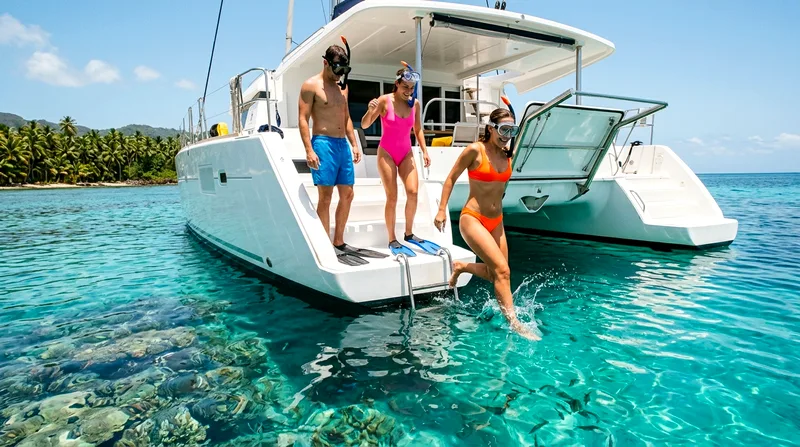
If you're traveling with young kids or anyone unsteady in open water, prioritize boats that mention swim platforms, ladders, and life vests in their description — not every operator highlights this, and it's worth messaging ahead if it isn't clear. If you're a couple or a solo traveler happy to socialize, the mid-size shared cruises (30-50 people) tend to hit the best balance of cost and comfort. Senior travelers generally do better on the slower-paced morning sailings, before the afternoon party cruises start blasting music and the sea breeze picks up.
Families with Kids and Non-Swimmers
Most operators set a minimum age — often around 4 to 6 years old — and require life vests for children and weak swimmers at every stop, not just the deep-water ones. The turtle snorkel sites are typically in water 6 to 10 feet deep, calm and close to shore, which makes them genuinely workable for first-time snorkelers and nervous adults, not just confident swimmers. Ask specifically whether a crew member gets in the water to assist — the better family-oriented operators do this as standard, others only on request.
Non-swimmers shouldn't write off the whole idea: you can stay on deck, use a vest and hang onto a rope line off the swim platform, or simply watch the turtles from the boat while others swim. What doesn't work well for families is the louder party-style cruise — background music at volume, rum punch flowing from midday, and a crowd skewing toward bachelor and birthday groups. Fine for teenagers, not ideal for a family with a napping toddler.
Couples, Groups and Party Seekers
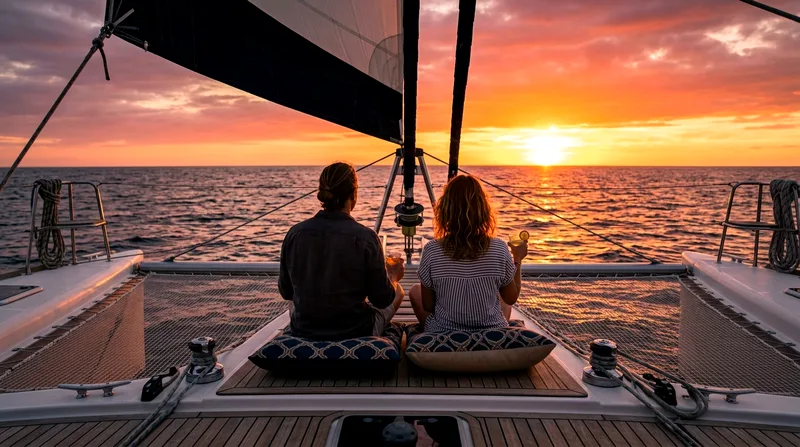
Couples get the most value from the mid-afternoon or sunset-adjacent sailings, where the swim stops happen first and the boat settles into a slower drinking-and-eating rhythm for the back half. Larger groups celebrating a birthday or hen party should look specifically at cruises marketed around their open bar and music — Cool Runnings Catamaran Cruises and similar operators built their reputation on exactly this crowd, with rope swings and louder sound systems as part of the draw.
If you want quiet, skip the booze-forward afternoon sailings entirely and book a smaller sail-only boat, or a private charter split among your own group. A loud party catamaran with 80 strangers is a completely different product from a 14-person sailing yacht, even though both get marketed under "snorkel and lunch cruise."
Catamaran Cruise Types Compared
Barbados cruises generally fall into four categories: large shared party catamarans, mid-size shared family/couple cruises, smaller premium sailing catamarans, and private charters. Each uses roughly the same stretch of coastline and similar swim stops, so the choice isn't really about where you go — it's about vessel size, noise, and flexibility.
Large shared catamarans (60-150 passengers) are usually motor-powered, with a DJ, dance floor space, and an open bar as the headline feature. They're the cheapest per person and the easiest to book last-minute through sites like Viator or directly via an operator's own page. The trade-off: crowded swim platforms, less personal attention from crew, and a vibe that leans toward celebration rather than nature-watching.
Mid-size shared cruises (25-50 passengers) are the most common booking for families and couples, and the category most tour listings on TripAdvisor and Viator default to. Expect two to three snorkel stops, a full Bajan lunch, and a bar that's open but not the main event. Island Routes and Barbados Excursions both run cruises that sit in this bracket.
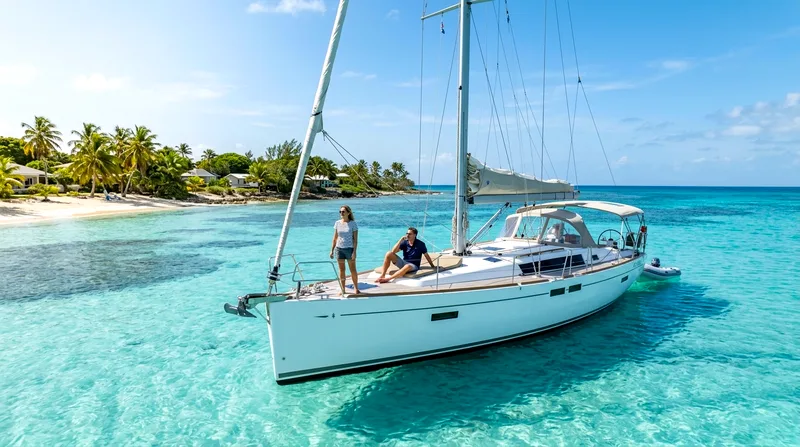
Smaller sailing catamarans (under 20-25 passengers), sometimes run by operators like Silver Moon Barbados, trade capacity for comfort — actual sailing rather than engine power for part of the route, quieter decks, and more crew attention per guest. Private charters, offered by several of the same companies plus specialists like El Tigre Cruises, let you set the route, timing, and group size entirely, at a correspondingly higher cost per person split across your group.
Vessel size, not itinerary, is the biggest difference between Barbados catamaran snorkel-and-lunch tours.
Barbados catamaran tour categories compared for snorkeling, lunch and group size
| Category | Typical Group Size | Noise/Atmosphere | Best For | Flexibility |
|---|---|---|---|---|
| Large party catamaran | 60-150 guests | Loud, music, bar-focused | Groups, bachelor/hen parties, younger travelers | Low, fixed schedule |
| Mid-size shared cruise | 25-50 guests | Moderate, social | Families, couples, solo travelers | Low to moderate |
| Small sailing catamaran | Under 20-25 guests | Quiet, relaxed | Couples, seniors, nervous swimmers | Moderate |
| Private charter | Your own group, any size | Set by your group | Families, reunions, groups of 6+ | High, route and timing adjustable |
Capacity and atmosphere vary by operator and vessel; confirm current group size and itinerary on the booking page.
Shared Cruise vs Private Charter
A shared cruise means you're one of several dozen (or a hundred-plus) passengers on a fixed schedule and fixed route — cheaper, easier to book, but no control over who else is aboard or how long you linger at a snorkel stop. A private charter puts your group alone on the boat, with a flexible itinerary the captain can adjust in real time — longer at the shipwreck if everyone's enjoying it, skip a stop if the swell's picking up.
The cost difference is substantial: private charters are typically priced per boat rather than per person, so they only make financial sense once you've got six or more people splitting the bill. For a couple or solo traveler, a private charter is rarely worth it; for a family reunion or a group of ten friends, it often costs about the same per head as a mid-size shared cruise while buying total flexibility.
Comparison Table: Tour Categories
Here's how the four categories stack up on the factors that actually affect your day on the water.
Snorkel Stops, Turtles and Shipwrecks
The west coast of Barbados has a resident population of green sea turtles that congregate around a handful of known shallow-water spots, often near Carlisle Bay and along the Holetown coastline, making catamaran turtle snorkel stops in Barbados reliably productive rather than a gamble. Crews typically toss bait (fish scraps) near the boat to draw turtles close, which raises some ethical debate — it's effective and makes for near-guaranteed sightings, but it's worth knowing it's not a "wild encounter" in the strictest sense.
Shipwreck snorkeling adds a second dimension to the trip. Carlisle Bay, just off Bridgetown, holds several wrecks in 15-25 feet of water, shallow enough for snorkelers (not just scuba divers) to see hull outlines and the fish that gather around them. Visibility on a calm day is usually decent, 15-20 feet or more, but it drops noticeably after heavy rain or when the wind's been up for a few days — something no operator will mention in advance, so check recent reviews on TripAdvisor for visibility complaints before you commit to a wreck-focused itinerary.
What Marine Life to Expect
Beyond turtles, expect sergeant majors, parrotfish, the occasional small ray, and reef fish typical of the Caribbean's calm leeward sites — nothing like the drama of a Red Sea reef, so set expectations accordingly. Compared to Grenada's wreck diving or the fish diversity around Tobago's Buccoo Reef, Barbados snorkeling is milder and shallower, which actually suits beginners and kids better even if serious snorkelers find it tame. If you've snorkeled in Aruba or the Turks and Caicos, Barbados feels calmer and closer to shore, with shorter swims between stops.
Lunch and Open Bar Explained
Nearly every Barbados lunch cruise serves food after the final swim stop, timed so you're not snorkeling on a full stomach. Expect a buffet-style or plated Bajan spread — think grilled chicken, flying fish (the national dish), macaroni pie, rice and peas, and salad, with rum punch poured well before the food arrives on most boats.
Bajan Menu Styles and Dietary Needs
Vegetarian options exist on most boats but tend to be an afterthought — a salad and some rice, rather than a distinct dish — so vegetarians and vegans should message the operator 24-48 hours ahead rather than assume. Flying fish and other seafood dishes dominate menus because they're cheap and traditional, which is great if you want an authentic taste of Bajan cuisine, less great if you have a shellfish allergy and need to double-check preparation areas on a shared buffet line.
Drinks Packages and What Is Covered
Barbados catamaran open bar packages usually cover local rum, rum punch, beer, and soft drinks, poured continuously from boarding until the final stop before docking. Premium spirits, wine, and bottled imported beer are often excluded or cost extra — check the listing wording carefully, since "open bar" doesn't always mean every bottle on the boat. Parties with kids should ask whether juice and water are freely available too, since the open bar framing sometimes buries the non-alcoholic options in the fine print.
What to Check Before Booking
Read the fine print before you pay a deposit, not after. Tour listings on Viator and TripAdvisor vary enormously in how clearly they state inclusions, and the gap between "snorkel gear provided" and "snorkel gear available for a fee" matters on the day.
Inclusions, Group Size and Cancellation
Confirm four things before booking: whether snorkel gear and life vests are included or rented separately, the maximum passenger count for your specific departure (not just the boat's stated capacity), the cancellation policy for bad weather, and whether hotel pickup is included or an add-on. Most reputable operators offer free cancellation up to 24-48 hours before departure, with weather-related cancellations rebooked rather than refunded outright — but policies differ enough between Island Routes, Barbados Excursions, and smaller independent boats that you should read the specific terms rather than assume.
One thing to avoid: booking the cheapest listing without checking recent review dates. A boat with great reviews from three years ago may have changed ownership, crew, or itinerary since. Cross-reference recent TripAdvisor and Viator reviews from the last few months for the clearest picture of current standards.
When to Book Your Cruise
Barbados catamaran snorkeling cruises run year-round, since the west coast stays sheltered even outside peak season. That's a genuine advantage over somewhere like St. Lucia, where swell and rain can shut down west coast boat trips more often during the wetter months.
Seasonal Weather and Booking Lead Time
December through April is peak season — dry, consistent trade winds, and the busiest cruise schedules, which also means boats fill up a week or more in advance, especially around Christmas, New Year, and Crop Over in late July/early August. Book two to three weeks ahead if traveling in peak months; a few days' notice is usually fine from May through November, the quieter, slightly wetter stretch of the year. Hurricane season (June to November) rarely cancels these cruises outright since Barbados sits at the southern edge of the main storm track, but short afternoon downpours can shorten a swim stop or two.
Frequently asked questions
What is included in a Barbados catamaran snorkeling tour?
Most include snorkel gear, life vests, two to three snorkel stops (often a turtle site and a shipwreck), a Bajan-style lunch, and a drinks package ranging from soft drinks only to a full open bar. Hotel pickup is sometimes included, sometimes an add-on — always confirm on the specific listing before booking.
Will I see sea turtles on the snorkeling tour?
Almost certainly, if the itinerary includes a turtle stop near Carlisle Bay or Holetown — these are resident populations, and crews often use bait to bring them close to the boat. Sightings aren't 100% guaranteed every single trip, but recent reviews on TripAdvisor and Viator consistently report turtles showing up.
Is the open bar included in the tour price?
On cruises advertised as having an open bar, local rum, rum punch, beer, and soft drinks are typically included in the base price. Premium spirits or imported bottled drinks often cost extra — check the specific listing wording rather than assuming "open bar" means unlimited everything.
Are catamaran tours suitable for non-swimmers and children?
Yes, with caveats: most operators set a minimum age (often 4-6), require life vests for weak swimmers, and run snorkel stops in shallow, calm water around 6-10 feet deep. Avoid the loud party-style cruises for young kids and ask in advance whether a crew member assists non-swimmers in the water.
Can I snorkel at shipwrecks on a catamaran tour?
Yes — several wrecks in Carlisle Bay sit in 15-25 feet of water, shallow enough for snorkelers rather than only scuba divers. Visibility depends on recent weather, so check recent reviews for reports of murky water before booking a wreck-focused itinerary.