Compare free community hikes with paid guided Barbados hiking tours across gullies and the east coast, graded for solo travellers and active seniors.
Which Barbados Hiking Tour Suits You
Barbados sells itself on beaches, but the interior does something the coastline can't: it changes character every mile. Inland, limestone gullies hold fragments of the rainforest that once covered the whole island. Along the east coast, Atlantic swells have carved cliffs and bluffs above Bathsheba that bear no resemblance to the calm west coast postcard shots. Barbados hiking tours — whether free community walks or paid guided outings — are how you reach both without getting lost or badly sunburned.
The honest starting point is this: not every hiker needs a paid tour. Barbados has one of the Caribbean's strongest traditions of free, organized walking, largely thanks to Hike Barbados and local walking clubs that have run weekly routes for decades. A paid guided hike earns its cost through smaller groups, flexible timing, transport to trailheads you can't easily reach by bus, and a guide who'll explain the geology of Welchman Hall Gully or point out where Hackleton's Giant tree stands in St. Joseph Parish. Compare that to Jamaica's Blue Mountains hikes, which almost always require a paid guide and hotel pickup because of distance and terrain — Barbados is far more forgiving and walkable independently if you're confident with a map.
Solo travellers
Solo travelers get real value from the free community hikes. They're social by design — walkers chat in clusters, nobody expects you to keep pace with a stranger, and there's safety in a group of twenty-plus people on a rural road. If you'd rather not navigate alone to a trailhead in St. John Parish, a paid small-group tour with hotel pickup removes that friction, usually for a modest per-person cost that includes transport both ways. The trade-off: paid tours run on fixed schedules, so if you're hoping to hike at dawn before the heat builds, check whether early slots exist before booking.
Active seniors and mixed-ability groups
Active seniors do well on graded gully walks — Welchman Hall Gully has maintained paths with limited elevation change, and Coco Hill Forest offers gentler, shorter loops aimed at general visitors rather than serious trekkers. Avoid the longer east coast cliff routes if balance or heat tolerance is a concern; the ground there is uneven limestone and tree roots, with little shade in places. For mixed-ability groups — say, grandparents and teenagers traveling together — a private guided tour lets you set the pace and skip sections that look too exposed, something a scheduled group hike won't offer.
Barbados Hiking Tour Types Compared
Four broad categories cover almost everything on offer: free community hikes, paid small-group guided walks, private guided tours, and self-guided visits to managed sites like Welchman Hall Gully, which is run by the Barbados National Trust and charges a modest entry fee rather than a tour price. Each suits a different traveler, and conflating them is the most common planning mistake.
Free community hikes cover more distance for no cost, while paid guided and private tours trade money for flexibility, transport and a more personal pace.
Barbados hiking tour categories compared by difficulty, pace and suitability
| Tour Category | Typical Duration | Difficulty | Pace Flexibility | Best For |
|---|---|---|---|---|
| Free community hike (Hike Barbados) | 2-4 hours | Easy to strenuous (graded) | Low — fixed group pace | Solo travelers, budget-conscious hikers |
| Paid small-group guided walk | 2-3 hours | Easy to moderate | Moderate | Couples, first-time visitors wanting context |
| Private guided tour | 2-4 hours | Easy to moderate, adjustable | High — set your own pace | Families, seniors, mixed-ability groups |
| Self-guided gully visit (e.g. Welchman Hall Gully) | 1-1.5 hours | Easy, maintained paths | High — no group at all | Seniors, anyone wanting a short, low-effort walk |
Durations and difficulty are typical; always confirm current grading and route details before booking.
Free community hikes vs paid guided walks
Hike Barbados and the Barbados Hiking Association run free, scheduled walks — typically on Sundays, sometimes with midweek options — graded by distance and pace (often labeled something like "stop," "medium," or "fast" to signal intensity). These cover genuine ground, sometimes 8 to 10 miles, crossing parishes on foot with a volunteer leader. They're free, well-attended, and a good way to meet Bajans rather than only other tourists. The catch: routes and meeting points change week to week, schedules are published informally, and there's no guarantee of English-only commentary on local flora or history — you're there to walk, not necessarily to be guided in the tourist sense.
Paid guided walks, by contrast, are built around visitors. Expect a fixed itinerary, a guide narrating as you go, hotel pickup in many cases, and a group capped at a size that keeps things personal — often under fifteen people. You pay for structure and convenience, not necessarily for better trails. If you want geological explanations of the gullies or details on endemic plants, a paid guide usually delivers more of that than a community hike leader focused on logistics and pace.
Private vs small-group tours
Private tours cost more per person but solve two real problems: pace and flexibility. If you're traveling with young children, a senior with joint issues, or you simply hate waiting on slower walkers, paying for a private guide lets you dictate stops, turn back early, and linger at viewpoints near Bathsheba without holding up a group. Small-group guided tours are cheaper per head and often more sociable, but you're locked into the group's schedule and ability level. For couples or solo travelers on a budget, small-group tours are the better value; for families or anyone needing a slower, adaptable pace, private is worth the premium.
Gully and East Coast Hikes Graded
Barbados splits neatly into two hiking environments, and most tours pick one rather than mixing both in a single outing. Knowing which you prefer — shaded limestone gullies or exposed Atlantic cliffs — matters more than which operator you choose.
Rainforest and gully walks
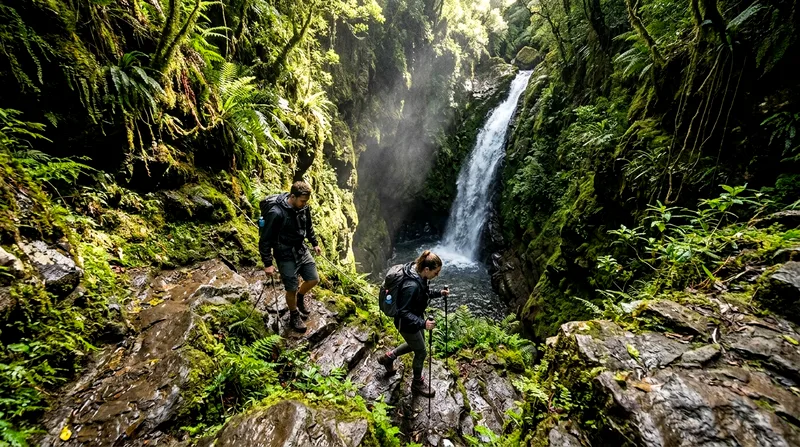
Welchman Hall Gully, managed by the Barbados National Trust, is the benchmark: a roughly 1,640-foot sinkhole system with a maintained path, mature trees, and resident green monkeys you'll likely spot if you're quiet. It's self-guided, costs a standard entry fee (check current pricing before visiting), and takes about an hour at an easy pace — genuinely suitable for seniors and young children. Coco Hill Forest, a smaller private reserve, offers a softer, more curated experience with shorter loops and less dramatic terrain, better suited to a relaxed morning than serious exercise. Neither compares in scale to Dominica's rainforest trails or St. Lucia's Gros Piton, but that's the point — these are accessible half-day outings, not summit attempts.
Coastal and cliff trails
The east coast around Bathsheba and Bath Beach is where Barbados hiking gets genuinely scenic — and genuinely harder. Trails here run along cliff edges with uneven limestone, exposed sun for long stretches, and occasional steep drops down to coves. This is where a guide earns their fee: route-finding isn't always obvious, and the surf below is too rough for swimming in most spots, something visitors expecting a Caribbean dip are routinely disappointed by. Expect 3 to 5 miles on a typical east coast hike, moderate fitness required, and sturdy shoes rather than sandals. Compare this terrain to Antigua's relatively flat coastal paths or Aruba's desert-like trails at Arikok National Park — Barbados's east coast demands more careful footing than either.
What to Look for When Booking
Booking a guided hike in Barbados is low-risk compared to, say, arranging a Blue Mountain trek in Jamaica or a multi-day trail in Trinidad's Northern Range — distances are short, logistics are simple, and most tours run within a few hours of any hotel. Still, a few details separate a good booking from a frustrating one.
Inclusions, transport and what to bring
Check whether hotel pickup is included — many small-group and private tours bundle it, while self-guided gully visits obviously don't. Water is sometimes provided on paid tours but not always; bring at least a liter per person regardless. Footwear matters more here than on a typical beach holiday: closed shoes with grip, not flip-flops, especially for gully walks where rocks stay damp even in dry season. Sun protection is non-negotiable on east coast routes — there's little tree cover once you're on the cliffs. A light rain layer is worth packing year-round, since gullies can have brief showers even when the coast is dry.
Group size, cancellation and safety
Smaller groups generally mean a better experience and more attention from the guide — look for stated caps rather than vague "small group" claims. Cancellation policies vary; some operators offer free cancellation up to 24 hours ahead, others less, so read the fine print rather than assuming. Weather cancellations are rare but possible after heavy rain, when gully paths can get slick. Always confirm current cancellation terms and reviews before booking, since policies and availability change and this page doesn't track live schedules.
When to Book and Best Time to Hike
Timing affects comfort more than availability. Barbados hiking tours run year-round, but conditions shift enough between seasons to matter for planning.
Dry vs wet season conditions
The dry season, roughly December through May, gives firmer footing on gully trails and lower humidity overall — this is when most visitors hike, and it's genuinely the more comfortable window. The wet season, June through November, brings heavier afternoon showers and higher humidity, though mornings are often still clear. Hurricane season overlaps with this period too, usually peaking August into October, which can affect outdoor plans island-wide, not just hiking. If you're set on an east coast hike, aim for a morning start regardless of season — heat builds fast on exposed cliff paths by midday.
How far ahead to book
Paid small-group and private tours are worth booking a few days ahead during peak season (roughly mid-December through April), when hotel occupancy is highest and guides' schedules fill faster. Free community hikes don't take bookings in the conventional sense — you simply show up at the published meeting point — but double-check the week's route and start time close to your hike date, since these can shift. Compare this to the Bahamas or Turks and Caicos, where hiking tourism is minor and options are far more limited; Barbados's dense network of free and paid walks is unusually good for the region.
Frequently asked questions
What are the best hiking trails in Barbados?
Welchman Hall Gully and Coco Hill Forest are the standout rainforest-style walks, both in St. Thomas and St. Joseph areas respectively, while the east coast trails near Bathsheba and Bath Beach offer the island's best cliff and ocean scenery. For a longer, more varied route, free Hike Barbados walks often combine gully sections with rural roads and coastal stretches in a single outing.
Do I need a guide for hiking in Barbados?
Not strictly. Welchman Hall Gully and similar managed sites have clear, maintained paths you can walk independently. East coast routes are less obvious and benefit from a guide, especially for route-finding near cliffs. A guide also adds context — geology, history, plant identification — that's hard to get hiking alone.
Are there free community hikes in Barbados?
Yes. Hike Barbados and the Barbados Hiking Association run free, volunteer-led walks, typically weekly, graded by pace and distance. They're open to visitors, cover genuine mileage across parishes, and are a practical, no-cost way to see inland Barbados with locals rather than only tourists.
How difficult are Barbados hikes for seniors?
Several options suit active seniors well, particularly Welchman Hall Gully's maintained, low-incline path and Coco Hill Forest's shorter loops. East coast cliff trails are harder going, with uneven limestone and sun exposure, so seniors with joint or balance concerns should favor a private guide who can adjust pace and turn back early if needed.
What should I bring on a Barbados hike?
Closed, grippy shoes rather than sandals, at least a liter of water per person, sun protection including a hat, and a light rain layer even in dry season. Cash for entry fees at sites like Welchman Hall Gully is useful, since card payment isn't always guaranteed on-site.